As the UK and the rest of the world progresses towards net zero carbon emissions, long duration energy storage (LDES) has garnered attention.
Here we answer the following questions:
- What is LDES?
- Why do we need it?
- Is the future of energy storage long, short, or somewhere in between?
So, what is long duration energy storage?
LDES largely does what it says on the tin: refers to the storage of energy over a ‘long’ period of time.
‘How long is long?’ you may ask.
The answer varies, given there is no set-in-stone definition.
According to the Long Duration Energy Storage (LDES) Council, there are four main types of LDES. Under the section labelled ‘Electrochemical,’ several types of storage batteries (not including li-on batteries) are labelled as having more than four hours duration of storage.
So, as a working definition, let’s say LDES refers to energy storage which is four hours or more. Of course, this definition may differ, depending on where you get your LDES info.
DNV notes that there needs to be a clearer definition of ‘duration.’
The group suggests there could be a need for LDES technology offering up to 100 hours of storage, otherwise known as ‘seasonal’ LDES.
It’s also worth noting that LDES usually refers to grid-scale energy storage, as opposed to home energy storage or storage on any other small scale.
Types of LDES
Here are the main ones, according to the LDES Council:
- Thermal – used to store heat or cold to be used later
- Electrochemical – including static, flow, metal (iron) air, and other types of battery chemistries
- Mechanical – including pumped hydro-storage (PHS), compressed air energy storage (CAES), and liquid air energy storage (LAES)
- Chemical – usually hydrogen stored as compressed gas, in liquid form, or bonded in substances
LDES sites in the UK
Dinorwig Power Station
Otherwise known as ‘electric mountain,’ Dinorwig Power Station sits inside the Elidir Fawr mountain in Llanberis, North Wales.
As a pumped hydro-storage plant, Dinorwig works by pumping water to an upper reservoir, and then releasing said water to generate energy, as and when required.
The power station can generate 1,728MW of electricity in just 16 seconds.
Flow battery in Oxford
In December 2021, the largest flow battery in the UK came into operation.
Located in Oxford, the 2MW/5MWh vanadium storage battery is part of a plan to make the city carbon neutral by 2040 or earlier.
Why do we need LDES?
As with other forms of energy storage, LDES is needed to provide stability to a changing electricity grid.
Globally, the International Energy Agency (IEA) predicts that renewables will account for more than 42% of electricity generation by 2028. That number includes a doubling of wind and solar PV.
In the UK, renewable generation hit 135TWh, contributing to a record 47.3% share of total generation in 2023. Growth in offshore wind was a key driver behind these numbers.
Renewables like wind and solar are key to achieving net zero carbon emissions. However, they also have hour-to-hour variability. In short, when the sun shines and the wind blows does not necessarily align with changes in electricity demand.
Storing energy for later use means grid operators can load-shift to when demand is at its highest.
Picture the following example.
A large solar farm generates a load of solar energy during the day. However, electricity demand doesn’t peak until later in the afternoon and early evening when there’s little to no sunlight.
LDES technology means the solar energy generated during the day can be stored, and then, discharged later to help meet peak demand.
A growing demand
The LDES Council suggests that by 2040, the world will need to deploy 8TW of LDES with a market potential of USD4 trillion.
In the UK, the government ended a consultation on LDES on March 5, 2024. The consultation document notes the following:
- 20GW of LDES in the UK is expected to deliver £24bn worth of energy savings.
- The government plans to deliver two streams of LDES.
- Stream 1 – LDES with minimum six hours duration and 100MW capacity
- Stream 2 – LDES with minimum six hours duration and 50MW capacity
In March 2024, the House of Lords Science and Technology Committee published a report entitled, ‘Long-duration energy storage: get on with it.’ The report suggests the UK government isn’t doing enough to support LDES.
Is the future of grid scale energy storage long, short, or somewhere in between?
There’s no doubt that LDES has a key role to play in achieving net zero carbon emissions.
However, not all grid scale energy storage technology is ‘long’ in duration.
For example, the Pillswood battery energy storage system (BESS) located near Hull stores energy for two hours at a time.

Storing wind energy generated from the Dogger Bank Wind Farm in the North Sea, the BESS can store 196MWh in one cycle, enough to power around 300,000 homes in Yorkshire for two hours.
In short, with a storage duration of two hours, the Pillswood BESS wouldn’t likely be classed as ‘long’ duration.
A suggestion that while LDES has a role to play, it’s not the only option when it comes to grid scale energy storage.
Start your energy storage journey today
While you’re not going to install a grid-scale LDES system, you can still contribute to reducing carbon emissions and balancing the grid (and saving on your energy bills) with a home battery storage system.
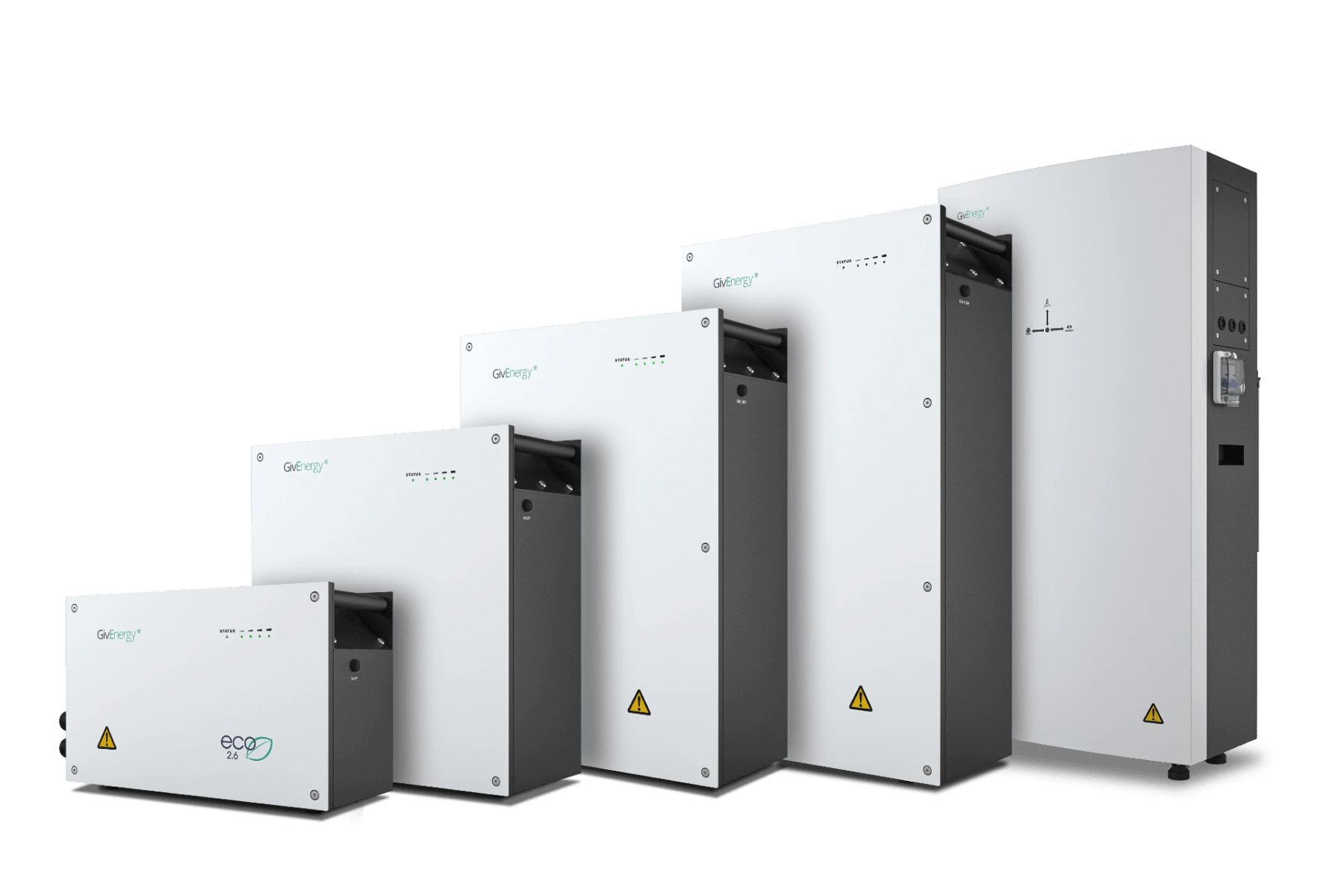
Find an approved GivEnergy installer near you today to get started.