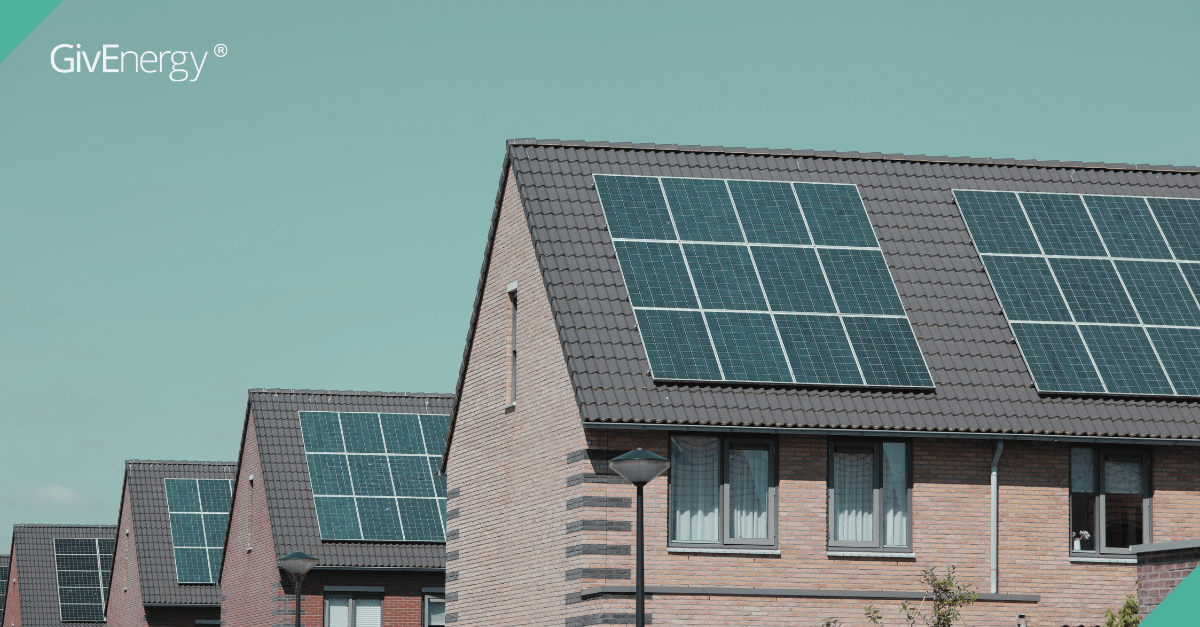
Walk around any residential area in the UK and you’ll likely see a home solar power installation.
Given their ability to reduce carbon emissions and energy bills, solar panels make sense.
Not to mention they tend to be scalable, and increasingly affordable.
But is a home solar power installation worth it without battery storage?
Here, we make the case as to why EVERY solar installation should have battery storage.
Do solar panels need battery storage?
Strictly speaking: no.
But…
Without battery storage, a lot of energy generated by a solar power installation will likely be wasted.
Let us explain with a hypothetical example.
Take a typical 3-bedroom detached property in the UK.
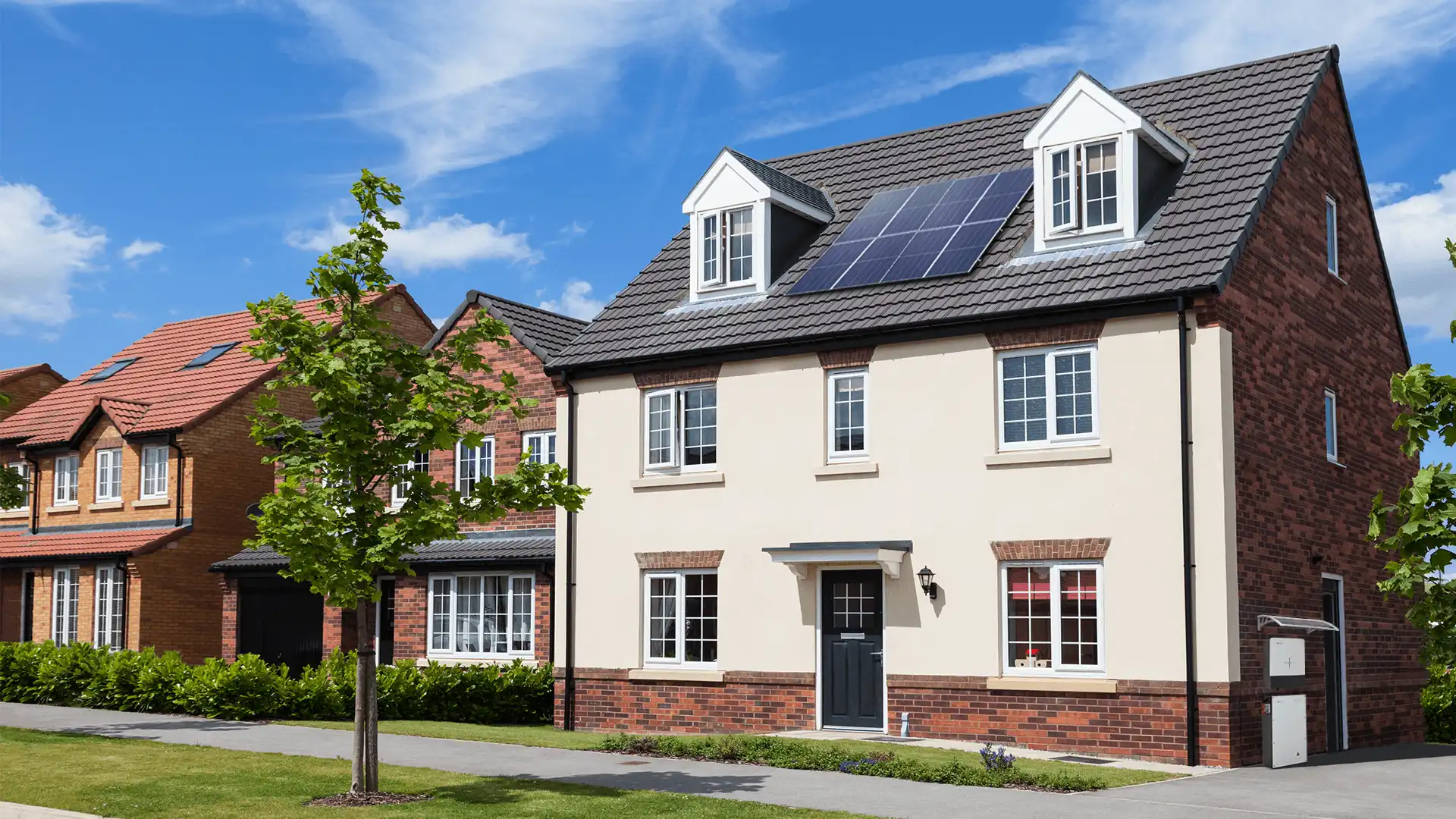

The owners – a married couple with two children – have decided to invest some of their disposable income in solar PV panels.
When the sun is shining during the day, the solar panels generate electricity.
However, this tends to be the time when the family is out at work and school.
Their electricity use peaks during the evening after everyone arrives home.
So, they need to find a way to store solar energy generated during the day to use during the evening.
Enter battery storage
The family invests a little bit more of their disposable income in a domestic battery storage system.
This allows them to get more out of their solar panels by storing energy for times of peak electricity usage.
A study published in the journal, Applied Energy backs up the notion that solar panels work better with batteries.
The results show that:
- Homeowners only use 30-40% of the electricity generated from their solar panels without battery storage
- With a home battery, residents can reduce imports from the grid by up to 84%
Beyond domestic battery storage
At grid scale, policymakers also recognise that solar panels need battery storage.
In May 2023, the UK’s first transmission-connected solar farm went live. Alongside the solar PV panels is a 49.5MW battery energy storage system.
Why?
Think of the hypothetical household situation but on a larger scale.

The entire electricity grid serving Great Britain goes through periods of low and high demand. These do not always align with solar generation.
So, storage batteries help shift electricity to when it’s most needed.
The need to further develop grid scale battery storage is acknowledged in the UK battery strategy.
How to pair solar installation with battery storage
You’ll need solar panels, a battery, and an inverter.
Let’s go through it step by step.
Solar panels
Sizing up the right solar PV panel system for your property requires you to consider several factors.
The Energy Saving Trust’s solar panel calculator can help inform your decision.
Among other factors, the calculator takes into account:
- Where you live
- Where you plan to install solar panels (roof-mounted, ground-mounted, etc.)
- How many panels you plan to install
- The angle of your roof
- Your daily electricity usage
Battery
Sizing a solar storage system also requires careful consideration.
Be sure to think about:
- Your daily electricity usage
- The capacity of your solar panels
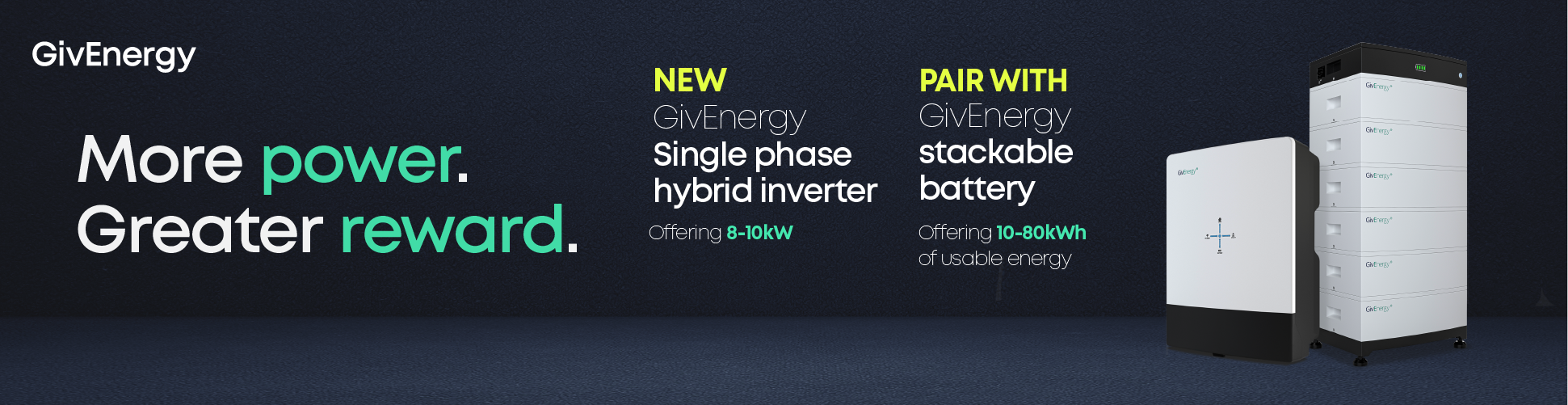
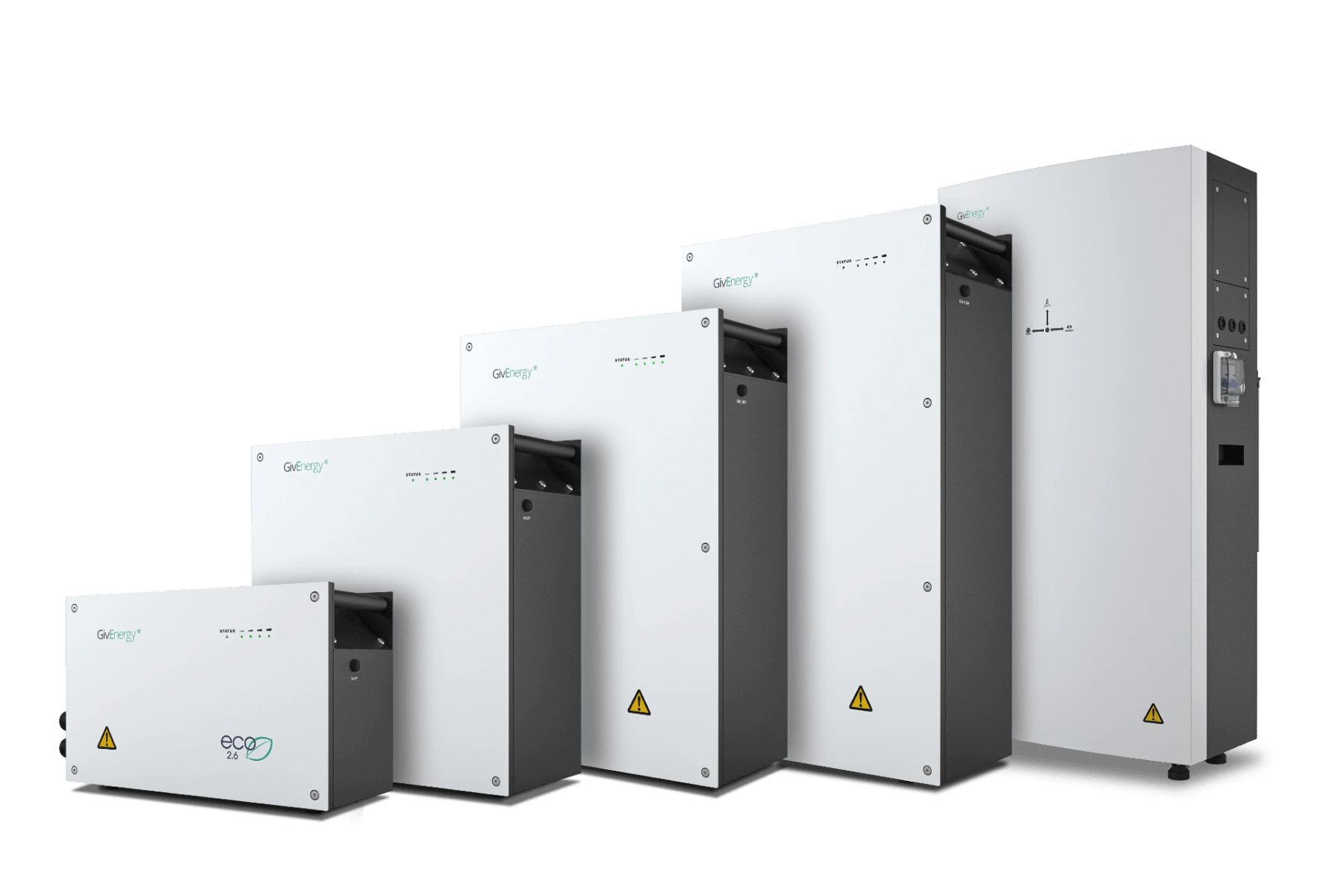
GivEnergy home battery systems vary in size from the 2.6kWh Giv-Bat 2.6 to the 13.5kWh All in One.
The right one for you depends on your specific circumstances.
Inverter
The ‘brains’ of your energy storage system.
Your inverter converts direct current (DC) to alternating current (AC).
An All in One system includes, as the name suggests, a battery and inverter in one unit.


Other options include an AC coupled inverter and hybrid inverter coupled with a battery unit.
When it comes to solar, the AC coupled inverter is suitable for homes with an existing solar setup.
Meanwhile, the hybrid inverter is best for:
- Homes starting a new solar project
- Homes installing in a compact space – needing a battery and solar inverter in one unit
‘What if I can’t install solar panels?’
For some, solar PV panels are simply not feasible, whether for practical, financial, or other reasons.
If this is the case, you could consider standalone battery storage without solar.
This works especially well if you’re on a smart tariff.
Benefits of this include:
- Storing energy at cheaper rates during off-peak hours
- Discharging during more expensive peak hours
- Helping to reduce strain on the grid during peak hours
Considering solar and battery storage, standalone battery storage, or another battery energy storage option?
Start your journey today by finding a GivEnergy approved installer near you.