Bidirectional charging in EVs…
… we know what you’re thinking.
“Slow down! I’m still getting to grips with regular EV charging!”
We get it. And if that’s you, you should read up on the basics of EV charging before reading this.
However, as an emerging technology, it’s worth explaining the what, how, and why of bidirectional charging in EVs.
Could your EV battery provide energy, as well as use it?
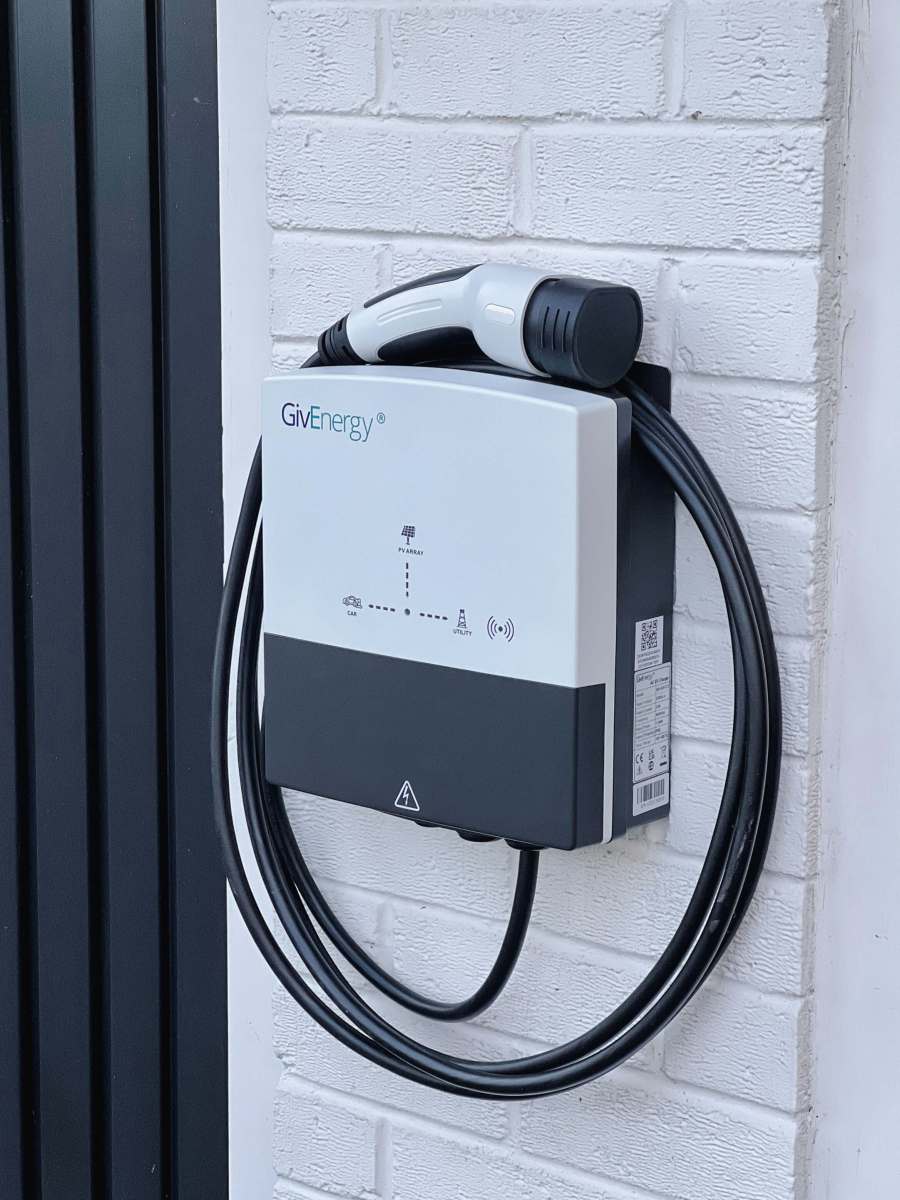
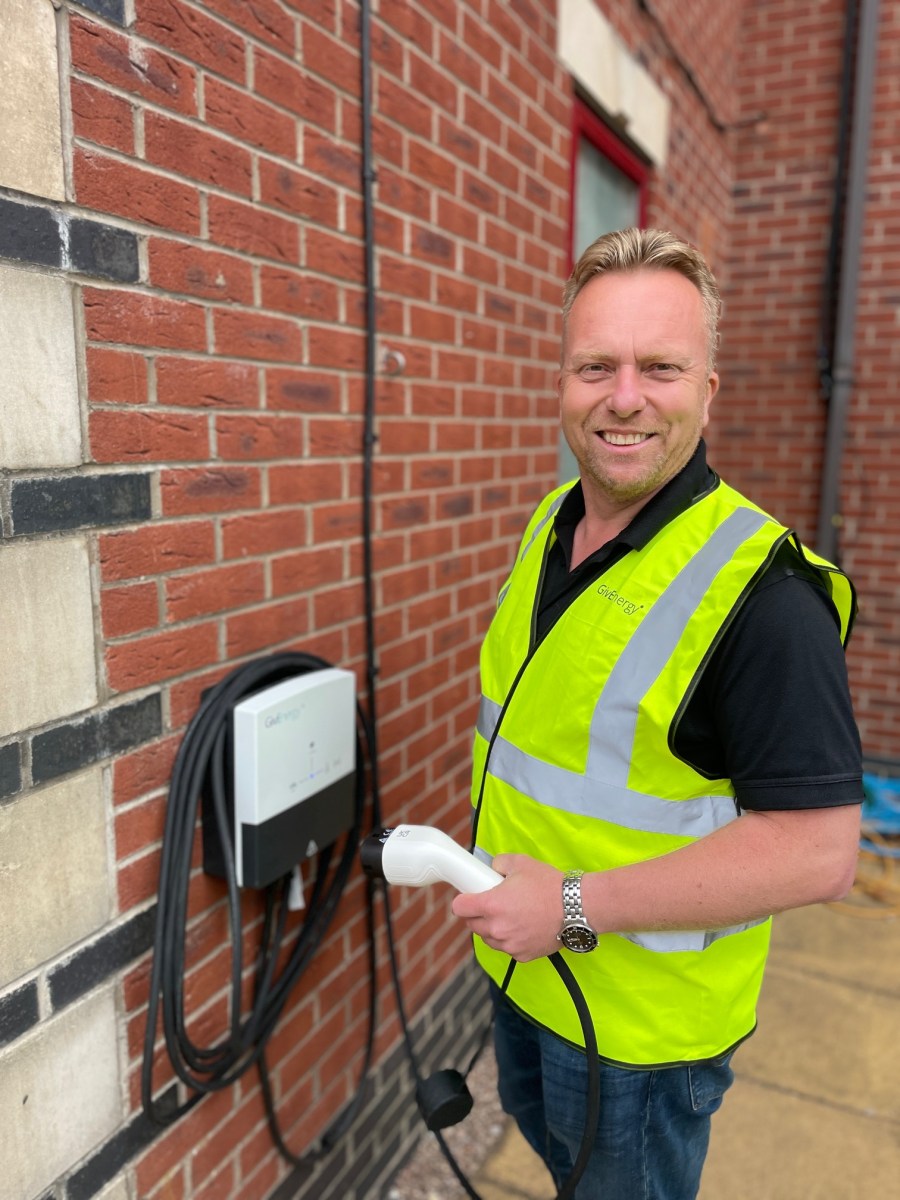
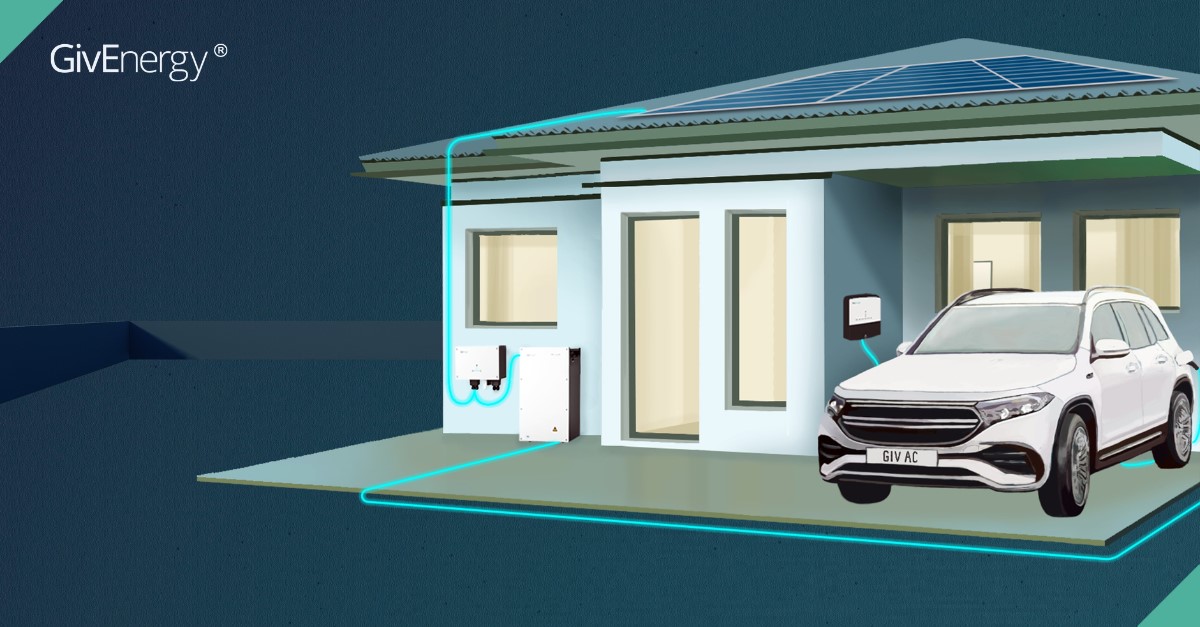
NOTE that if you’re looking for a way to charge your EV with clean cheap electricity, the GivEnergy EV charger is for you!
Just be aware that it doesn’t yet support bidirectional charging.
What is bidirectional charging in EVs?
As the name suggests, bidirectional charging in EVs refers to charging which goes two ways.
So, not only can you charge your EV, but you can also discharge your EV battery to power something else.
This could include:
- Your home
- Devices (like power tools when you’re out on the job)
- The grid
- Another EV
… etc.
What do you need for bidirectional charging?
Depending on what exactly you want bidirectional charging for, you’ll need one or more of the following below:
- Bidirectional EV charger
- Compatible EV
- CT (current transformer) meter
4 main types of bidirectional charging
1. Vehicle-to-load (V2L)
V2L allows you to use the battery capacity of your EV to power another device.
Out on the job and need to charge your power tools? Out camping in the wilderness and need to power your kettle for a cup of tea?
V2L could be for you.
You need…
… a compatible EV.
Plus a charging cable to connect the car’s AC charging socket to a standard 3-pin plug.
2. Vehicle-to-grid (V2G)
Exporting energy back to the grid is now a reality.
Prosumers who produce excess renewable energy, such as through solar PV panels, can get paid for exports through the Smart Export Guarantee (SEG).

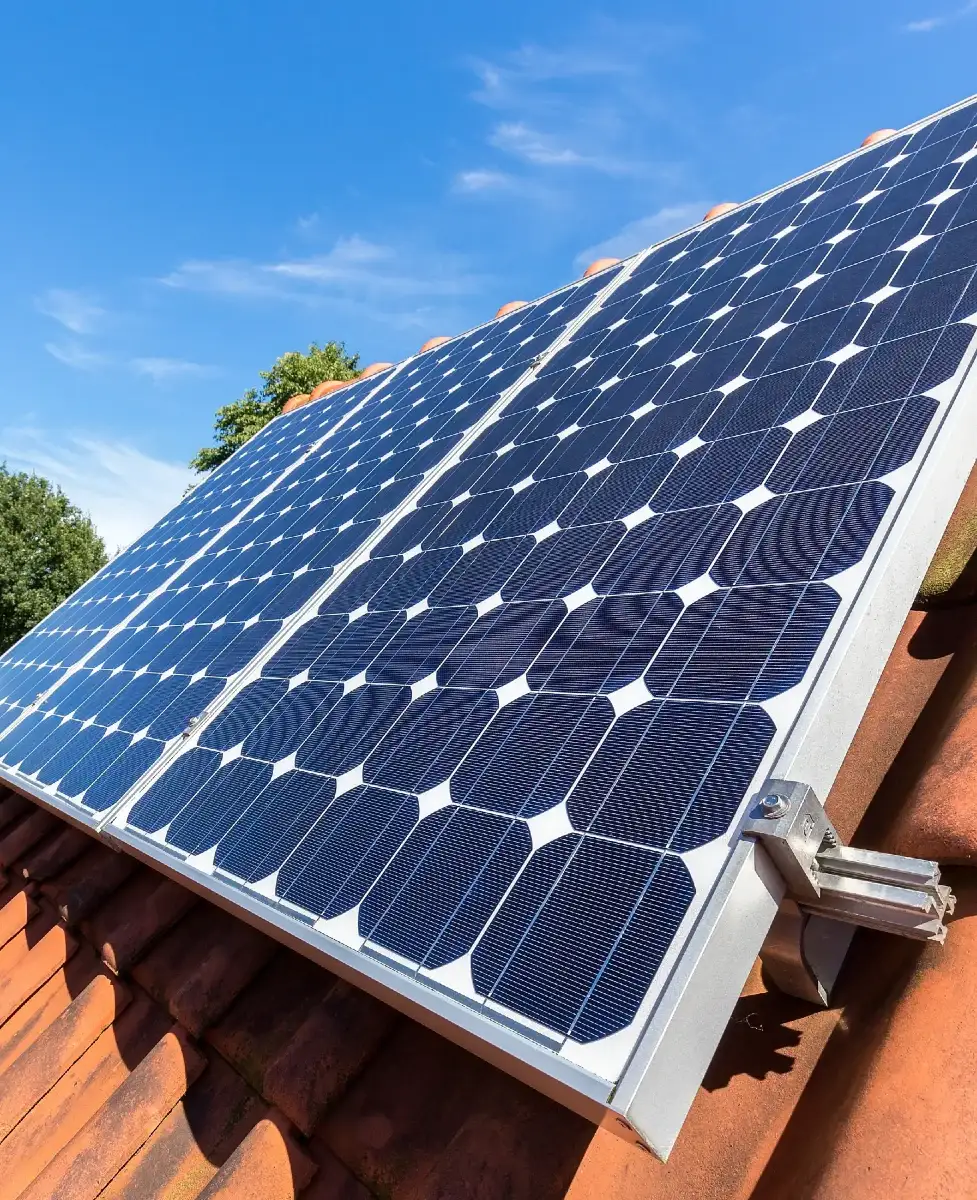
Through the GivBack scheme operated during winter, GivEnergy users are able to export excess energy in their battery storage systems.
Exporting energy back to the grid is key to reducing strain, especially during peak hours. This has only become more important as the grid relies ever more on renewables with hour-to-hour variability.
EV batteries can also play a part in reducing strain on the grid.
Got excess energy stored in your EV battery? Why not put it good use and send it back to the grid?
It’s something researchers at MIT have been looking into.
You need…
… a bidirectional EV charger and a compatible EV.
3. Vehicle-to-home (V2H)
Powering your home in the event of a power cut isn’t something we all need to dwell on day-to-day.
But if it is something that’s on your mind, home backup power is worth considering.
For a full guide on how to set up an emergency power supply (EPS), click here.
As well as a home battery, an EV battery could also be a means of powering your home.
You need…
… a bidirectional EV charger, a compatible EV, and a CT meter (for connections with a load greater than 100 amps).
4. Vehicle-to-vehicle (V2V)
Picture the scene.
You’re driving your EV on a long journey and underestimate how much charge you need to complete your journey.
You run into every EV driver’s nightmare scenario and run out of battery, leaving you stranded.
You could charge from another EV.
Exactly how you go about doing this is up to you.
Call a friend or family member who’s nearby and get them to drive their EV out to you?
Flag down a fellow EV driver at the side of the road and hope they’re generous enough to give you a little bit of charge?
Hopefully, you’ll never find yourself in this situation. However, it’s best to prepare for the worst.
You need…
… a bidirectional EV charger and two compatible EVs.
Is it the future?
Bidirectional charging is not yet available in all EVs.
However, some EV manufacturers have indicated this could change.
GM and Tesla have said that all EV models will come with bidirectional charging functions as standard by 2026 and 2025, respectively.
In Massachusetts, United States, one town is making use of V2G charging thanks to a fleet of electric school buses. Excess energy stored in the buses’ batteries can be used in the event of power outages.
Will bidirectional charging in EVs be something YOU as an ordinary consumer of energy use on a regular basis?
For now, the answer is: probably not.
For one thing, lack of standardisation limits the availability of bidirectional charging.
Moreover, if you have an EV, you’ll probably want to use it for its intended purpose: getting around.
Bidirectionality could help you charge a few power tools here, and a few camping items there.
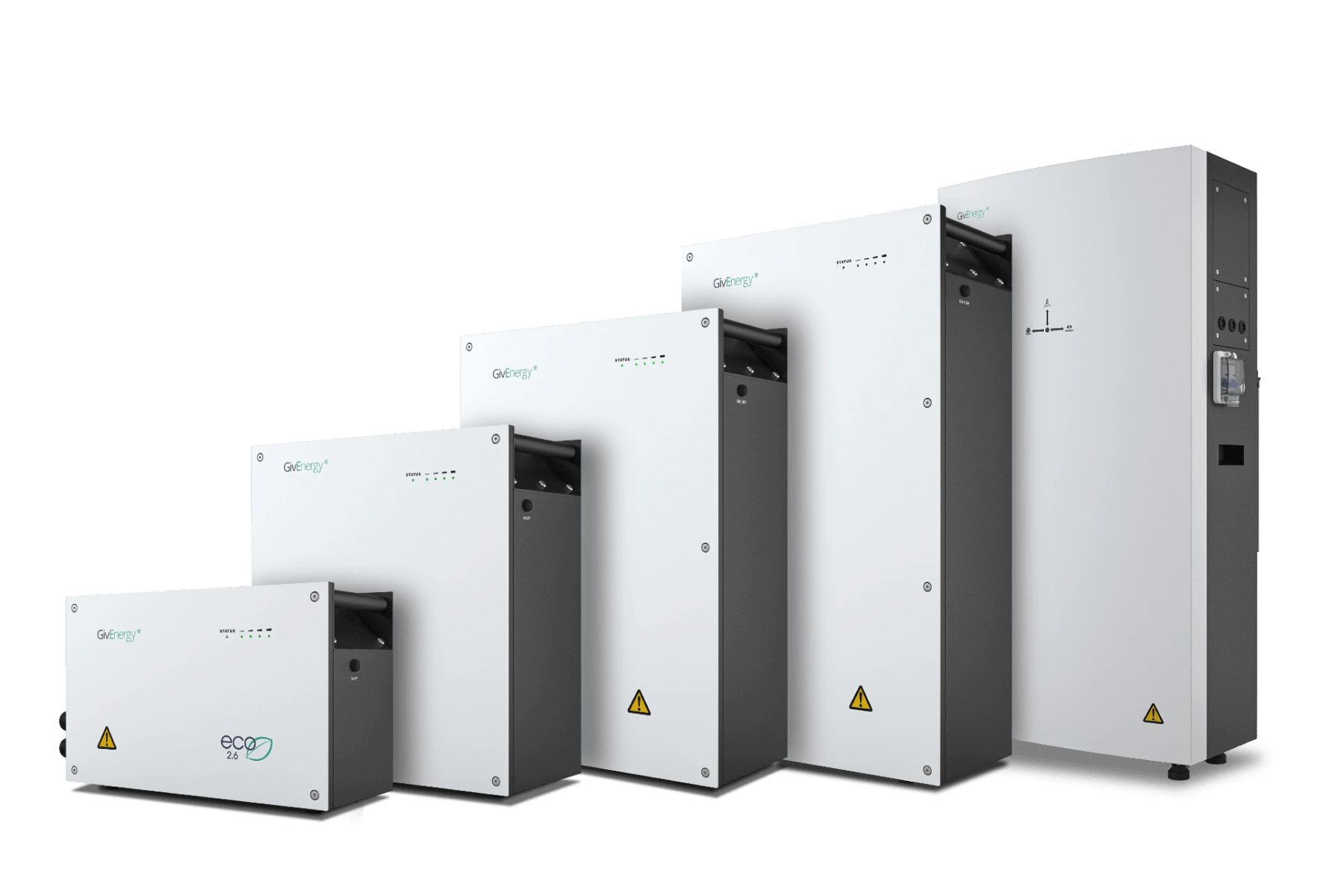
But for a viable energy storage solution in your home, you should really get a battery storage system.
Whether that’s standalone battery storage or battery storage coupled with renewables, that all depends on your individual circumstances.
Get started today!
Want to get yourself on the path to energy freedom?
Click here to start your journey.