What is a solar farm?
A question you may have pondered, especially as there are now more than 1,000 of them across the UK.
Here, we explain what a solar farm is, a few solar farm figures, and whether solar farms need solar battery storage.
So, what is a solar farm?
While there is no set-in-stone definition, a solar farm tends to have a few distinct features.
As the term suggests, a solar farm tends to be based across a large area of land, almost always a field.
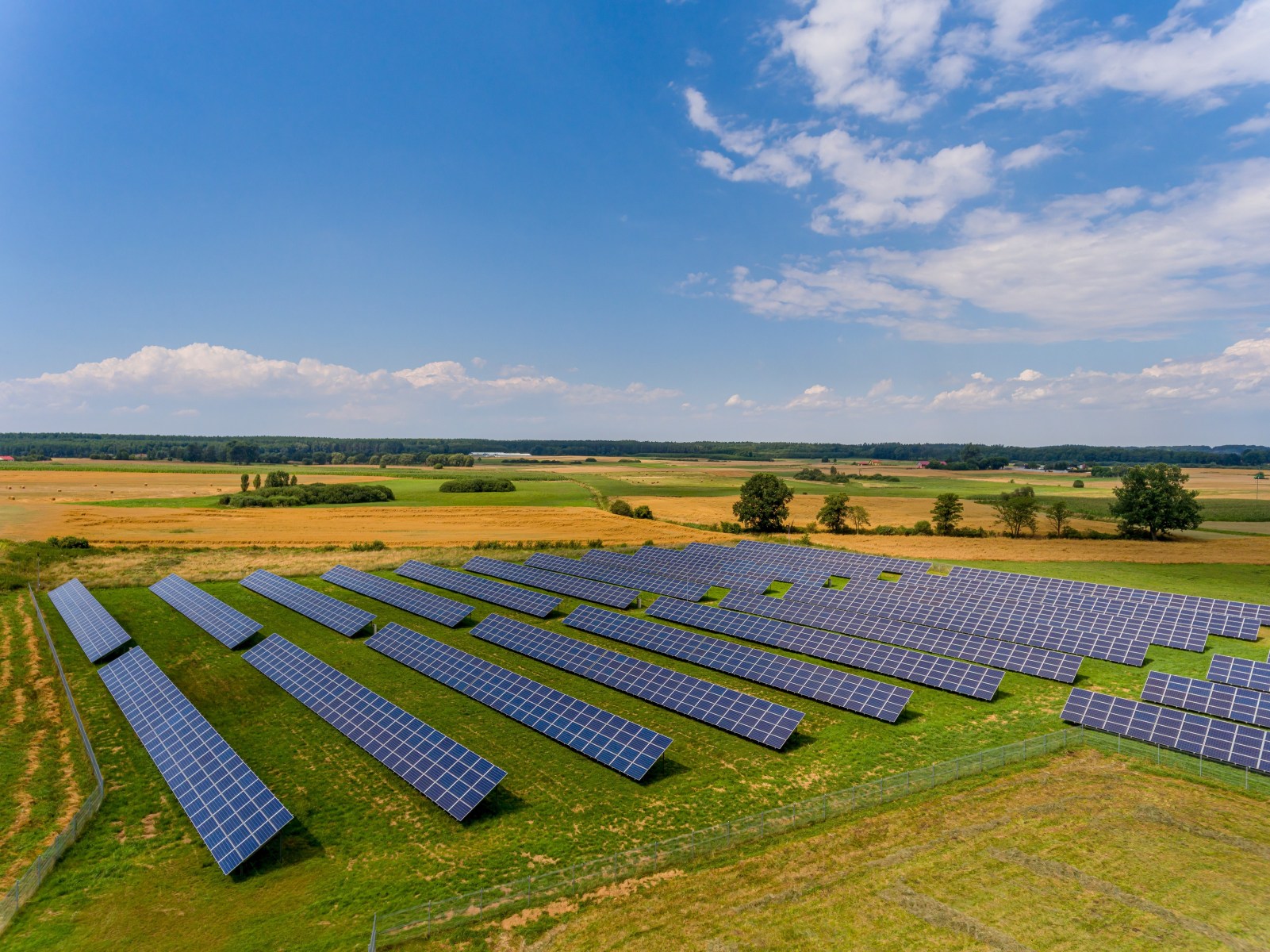
Compared with smaller scale solar installations – such as those in homes or businesses – solar farms are designed to provide larger capacity energy generation to support the electricity grid.
Solar farms almost always use ground-mounted solar panels, as opposed to roof-mounted.
According Solar Energy UK, solar farms typically cover an area of land anywhere between 1 and 100 acres.
UK solar farms in numbers
49%
That’s how much of the UK’s total solar capacity comes from ground-mounted or standalone solar, including solar farms.
As of March 2024, the UK’s total solar capacity stood at around 15.8GW across around 1.5 million installations.
3 million
That’s how many homes can be powered if 10,000MW of ground-mounted solar farms are built.
0.1%
That’s how much land area in the UK would be used if 10,000MW of solar farms were built.
Two thirds
That’s roughly how much of the total UK solar capacity installed in the last year will come from three new solar installations just given the go-ahead by the new Labour government.
The new Secretary of State for Energy and Net Zero, Ed Miliband – who visited GivEnergy in March 2024 – approved three new solar farms in the East of England.
Do solar farms need batteries?
Solar energy – like other renewables, including wind – has hour-to-hour variability. In short, the sun doesn’t always shine exactly when you need it to, such as during peak hours of electricity consumption.
To help offset this variability, solar farms need some form of energy storage.
This could be through grid scale battery storage.

Take the UK’s first transmission-connected solar farm as an example.
The 49.9MW site – located just north of Bristol – is the first in the country to feed electricity directly into the transmission network. The co-located 99MWh battery energy storage system means energy can not only be generated, but also stored and discharged, as and when necessary.
Other forms of energy storage are also available, including long duration energy storage (LDES).
This could be in the form of:
- Thermal
- Mechanical – the most common of which is pumped hydro-storage (PHS)
- Chemical
… and others.
Solar beyond solar farms
Let’s be honest. Most of us won’t be building massive solar farms to power our homes.
Instead, residential solar PV panels offer a more scalable and affordable solution.
The latest MCS figures suggest there are around 519,409 home solar installations.
If you want to generate your own renewable energy, solar PV is probably the best option for you.
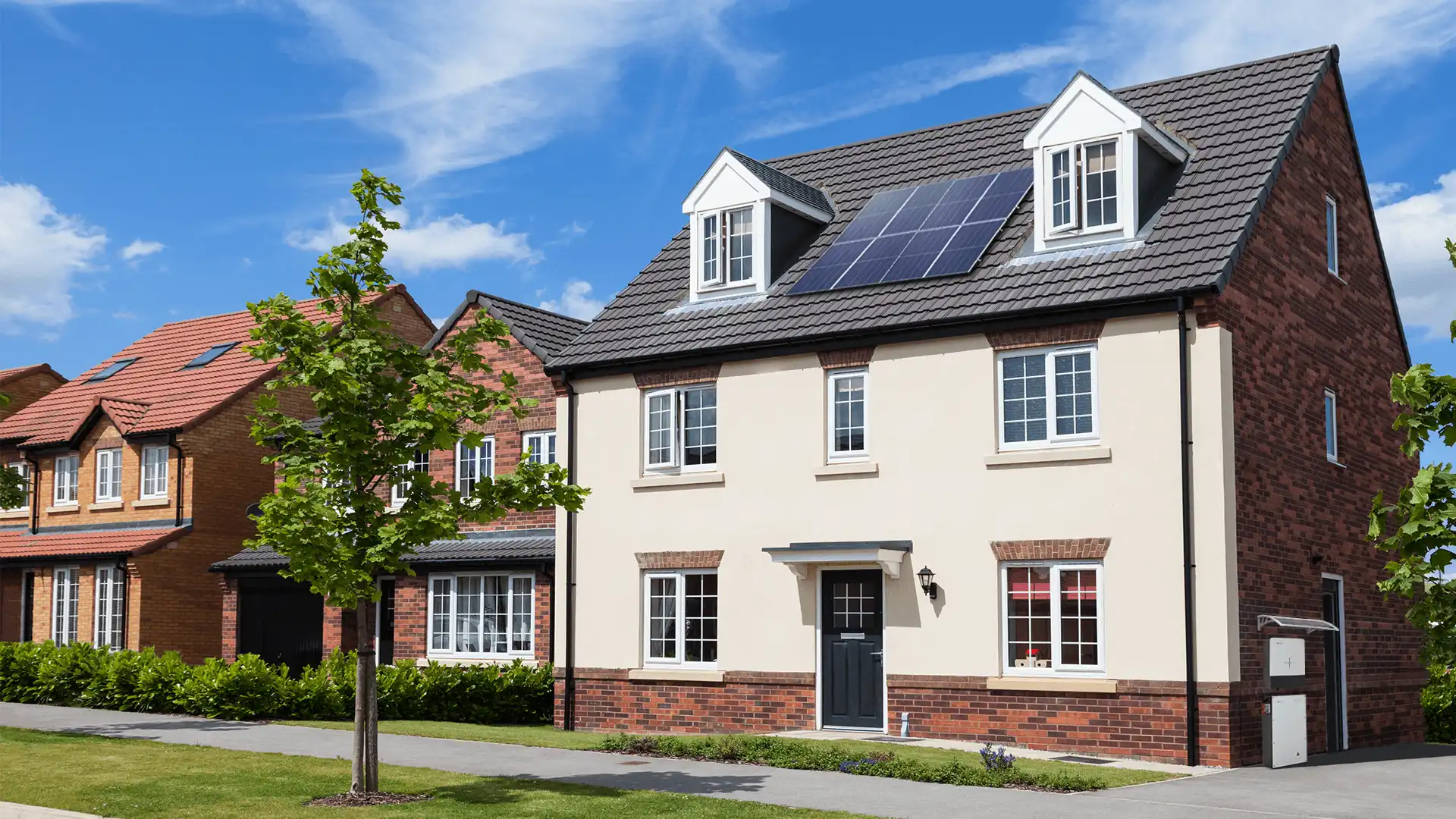

Generating renewables is one thing. However, being able to store energy is quite another.
That’s where home battery storage comes in.
By storing solar energy in a battery storage system, you can discharge to power your home, as and when required.
This could be during the evenings after you get home from work – a time when you might be generating little to no solar energy.
While solar panels strictly don’t need batteries, a lot of solar energy generated will go to waste without them.
Ready to start your journey?
If you want to play your part in decarbonising the grid – alongside the contribution of solar farms, of course – click here to get yourself on the path towards energy freedom.