A battery inverter is essential to any home battery storage system.
If you’ve ever looked up anything about home batteries, you’ve likely come across inverters.

Here, we walk you through what a battery inverter is, how it works, and which one might be right for you.
AC vs DC electricity: a short history lesson
We can’t talk about inverters without talking about alternating current (AC) electricity and direct current (DC) electricity.
Back in the 1880s, a public electrical distribution network was introduced by Thomas Edison. At that time, electricity was mainly used to supply lighting over short transmission distances.

However, as electricity networks expanded, it became increasingly clear that transmission over longer distances was necessary. For instance, electricity needed to get from coal-fired power stations to towns and cities located far away.
George Westinghouse and Nikola Tesla later pioneered the use of AC electricity which could be more easily transmitted over longer distances.
AC won the ‘current war’ against DC.
That’s why the UK electricity grid uses AC input. That’s why the power supplied to your home is AC. This has been the case since the early part of the 20th Century. Until the early 1960s, there were a few towns in Britain still using DC.
What does this have to do with inverters?
We’re getting there!
Home battery storage systems in the UK are on the rise.
Our own figures show there are around 5,000 installations of GivEnergy kit per month.
With a battery, homeowners can reduce:
- Energy bills by up to 85%
- Carbon emissions by up to 300kg per year
Homeowners can opt for:
- Battery storage with solar PV
- Standalone battery storage
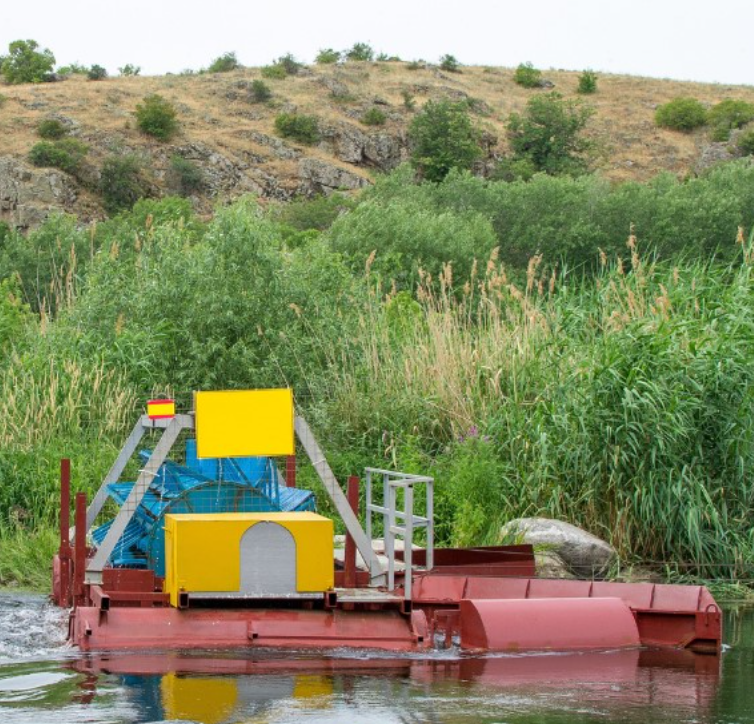
- Battery storage with other renewable technology, such as wind turbine for home or home hydro turbine generator

The problem is that…
… home batteries store energy as direct current (DC), whether that be from renewables or drawn directly from the grid.
To use the energy stored in a home battery, we need to change it from DC to usable AC electricity.
So, we need…
… a battery inverter!
An inverter effectively acts as a go-between to change the DC energy stored in a home battery into usable AC electricity.
Think of it as the ‘brains’ of your battery system.
AC coupled & Hybrid inverter: what’s the difference?
If you would prefer the answer to this question in a visual format, check out the GivEnergy YouTube channel!
In the video below, our Visual Content Manager, Andy Rogerson (AKA EV Man) explains all.
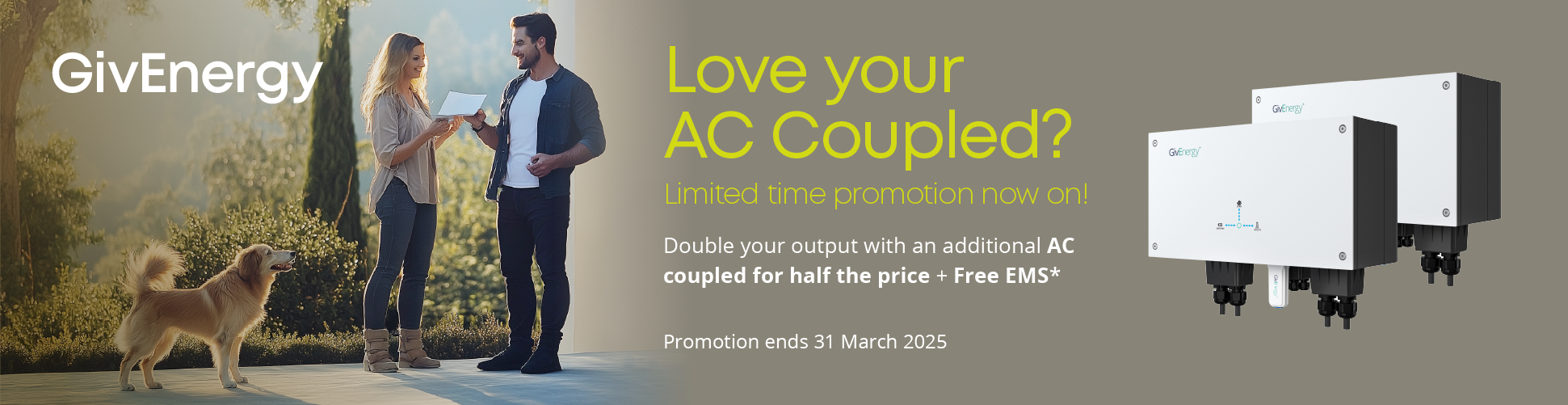
AC coupled inverter
Good for:
- Retrofitting batteries to an existing solar setup (assuming you already have a separate solar invertor)
- Battery storage plus other renewables, such as wind and hydro
- Standalone battery storage
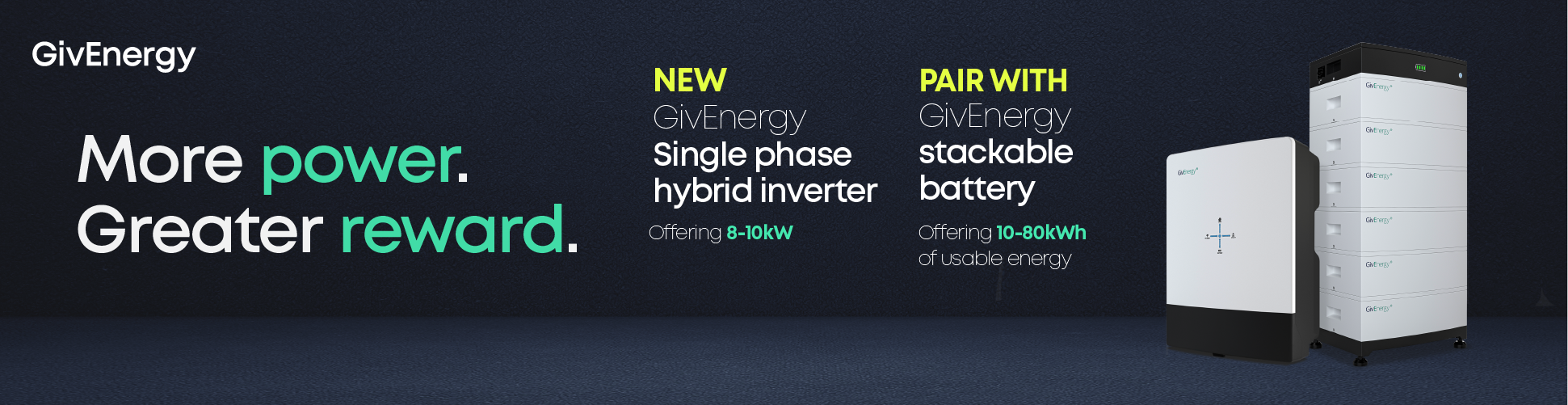
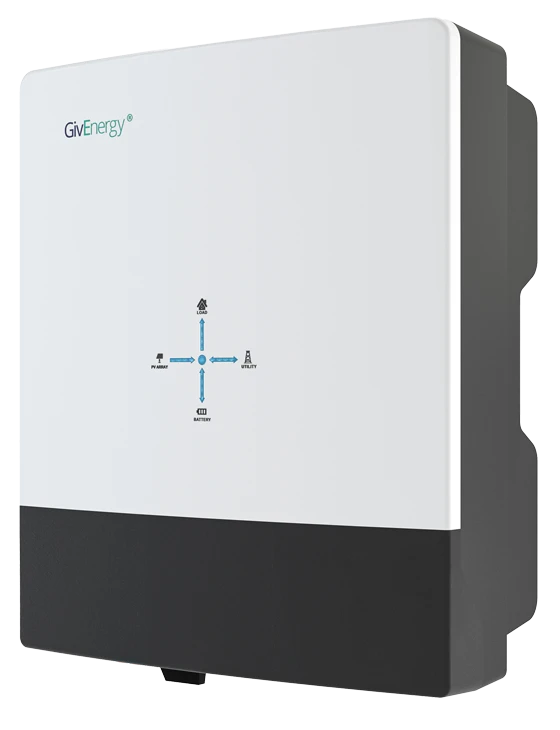
Hybrid inverter
Effectively a battery and solar inverter in one unit.
Good for:
- Starting a solar and battery storage project from scratch
- Installations in a property with limited space (no need for a separate solar inverter unit)
- Homes seeking a 3-phase system
- Standalone battery storage to which solar PV panels may be retrofitted later down the line
Remember…
… every property’s needs vary. Make sure to do your research about the best setup for you.
Start your journey today
Want to reduce your energy bills and carbon emissions?
Click here to find out more about which home battery storage system might be right for you.