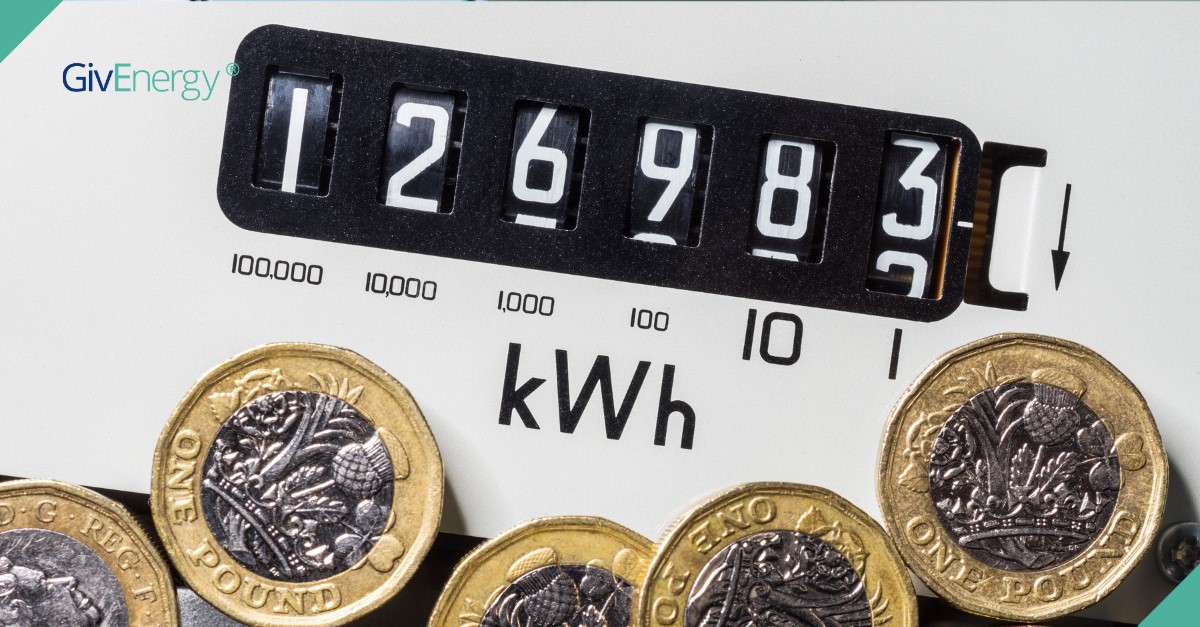
Rising energy bills are never far from making headlines.
UK energy regulator, Ofgem announced recently that the energy price cap between October 1st-December 31st, 2024 will rise to £1,717 per year for a typical household. This represents a 10% increase compared with the cap set between September 30th-July 1st.
GivEnergy CEO, Jason Howlett recently chatted to Modern Mindset with Adam Cox – a podcast designed to help listeners navigate the ‘minefield of modern life’.


In the 13-minute discussion, Howlett and Cox discussed factors behind rising energy bills, and how battery storage can help break the cycle of energy poverty.
Click here to listen to the full podcast…
… or…
… read below for the transcript.
Modern Mindset with Adam Cox: episode 495 with GivEnergy CEO, Jason Howlett
Rising energy bills more of a concern than immigration
Adam Cox: Joining me today is Jason Howlett, CEO of GivEnergy.
You’ve done a poll which surprised me. The results suggest that those surveyed are more concerned about rising energy bills than immigration. Did that surprise you too?
Jason Howlett: It did. We were surprised at just how many people were worried day to day about energy bills. If you listen to the news, you would think that immigration is the only thing to bother people. However, our data shows that’s not the case.
Factors behind the recent rise in energy bills
Adam: In the last few years, it seems we’ve seen energy bills getting higher and higher. For those who don’t necessarily understand why bills keep rising, just explain what’s happening.
Jason: As we’ve deregulated our energy markets, we are now more susceptible to the ebbs and flows of energy pricing. Even since we conducted our survey, we’ve heard from the regulator, Ofgem that bills will go up by an average of £149. This is to be expected. Bills usually fall during summer and rise during winter, as supply and demand balance out.
What we’ve seen is this pressure on energy prices following the invasion of Ukraine. As we’ve sought other sources of energy to replace Russian gas, this has driven energy prices higher.
We’re bringing more renewables into the energy mix which is lowering the overall cost. However, the overall picture is still one of concern when it comes to bills.

National Energy Action (NEA) estimates that 5.6 million UK households are in energy poverty. Nationally, about a quarter of people are worried about their bills.
Breaking the cyclical nature of rising energy bills with battery storage
Adam: It does seem that what’s happened proves how dependent we are on imported energy. That can be disrupted by conflict, political changes, and even interest rates. Behind your thinking is the idea that a future of renewable energy coupled with energy storage hedges our bets. It makes us less dependent on imported energy.
Jason: Absolutely.
Over many years now, we’ve demonstrated that energy storage is one of the keys to unlocking renewable energy.
We’re producing more renewable energy now than ever before through wind and solar. One of the biggest criticisms of renewables is that you don’t know exactly when the sun is going to shine or the wind is going to blow.

It’s true that we need to better match demand with the generation of energy. By using EVs, battery storage, etc., we can do this. These are mechanisms of storing energy at times when we don’t necessarily need it for our day to day living.
We can then use this stored energy during times when we really need it.
Beyond renewables, there are now some tariffs in the market with which you can use a standalone battery by itself without renewables.
This setup can give you access to cheaper energy. Think of the old Economy 7 tariff for instance. You can buy energy more cheaply overnight, then use it from your battery during the day. This way, you can access the cheaper and generally greener energy to power your home.
With some tariffs, you can get energy for 7-10p per kWh overnight. Store that energy in a battery and use it during the day, and you can avoid paying more expensive rates which can go up to around 30p per kWh.
Buying energy smarter can result in huge savings.
Adam: It seems so obvious when you say it. So many us wouldn’t hesitate to buy food then store it in the freezer to eat later, or earn some money and put it in a bank account for later use.
But with energy, so many people don’t really think in that way.
Jason: It’s a huge opportunity.
And yet, what we learned from some of the survey data is that so many people still don’t know where to get reliable information on this topic.
It’s up to us, trade bodies, government, etc. to get the message out there that a battery really can unlock a lot of energy solutions, rather than just buying energy off the open market.
Adam: And I suppose that can help with this feeling of powerlessness. If people know how to use batteries, what they pay for energy is not so dependent on the war in Ukraine, action by government, action by energy companies, etc.
Jason: That’s right.
And one of the best things about battery storage systems is that once you’ve entered your tariff data, your system is ready to go. For example, with a GivEnergy system, you’d just enter the information into our app.

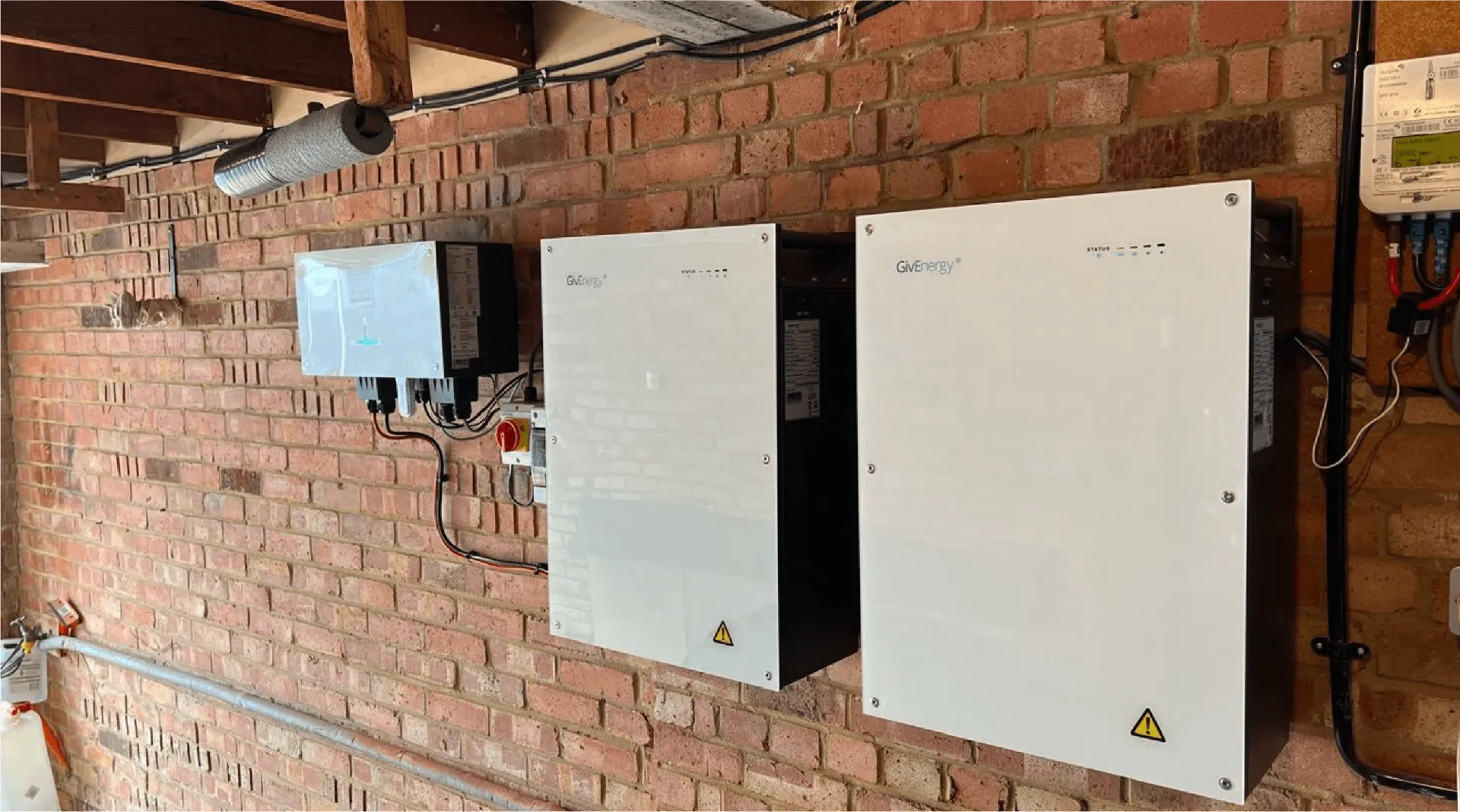
With this information, your battery will automatically charge when energy is cheaper. You can then use this cheaper energy to power your home, as and when required.
It’s really not that complicated. We just have to get the message out there.
Adam: How do you see the future when it comes to energy? Will the government play more of a role in energy? Will energy companies become greener?
Jason: We’re challenging the government to stop doing handouts to people who need help with their energy bills.
Don’t get me wrong. As a short-term measure, we need direct financial support for people who are struggling with bills. That’s why I’m pleased the government has decided to extend the household support fund – another £421 million for the most vulnerable over this coming winter.
But we’ve got to stop the cyclical nature of energy poverty. Instead of just giving handouts to those who are having challenges with energy bills, let’s put in place the infrastructure and assets which can help them in the long run. Installing a battery can help those same people for next 10-15 years. And the payback period on batteries is about 3-4 years, depending on energy consumption.
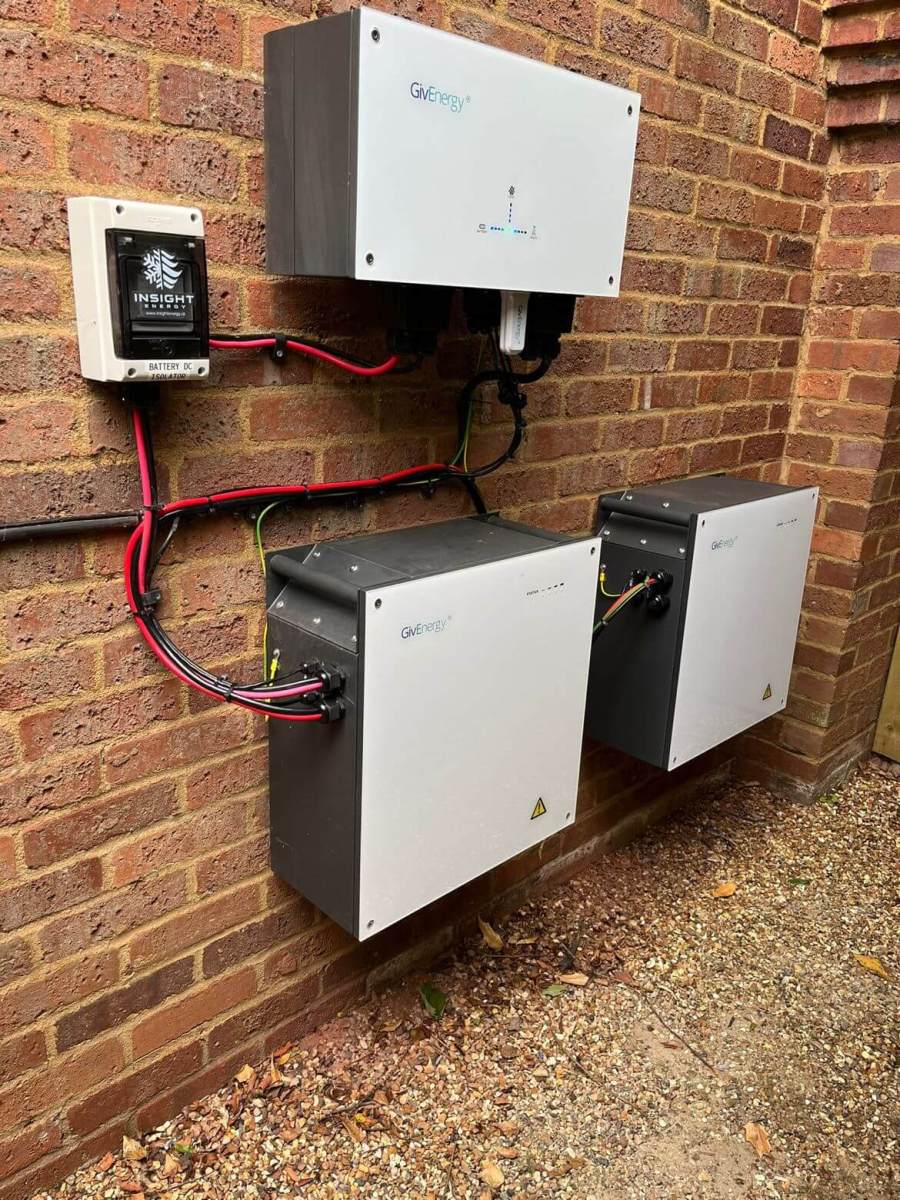
Giving people batteries also makes a huge difference to the grid. At times, the national grid is under huge stress. We can start to reduce strain on the grid by fragmenting storage around the whole network.
For us, it’s about changing from lost handouts – which effectively just line the pockets of the energy companies – to investing in storage which will truly change the future of energy.
Factors hampering the deployment of home batteries
Adam: What stops people from installing a home battery?
Jason: There are two main barriers.
The first is upfront cost.
Even for a 5kWh battery which you could charge twice during the day, you’re looking at £2-2.5k. Even though VAT has been removed from the sale of battery storage systems – which is a huge positive – the overall cost is still high.
We’d like to see batteries included in salary sacrifice schemes through workplaces. That way you’d get tax benefits like EV salary sacrifice schemes.
Because of the upfront cost, we’d like to see the government subsidise home battery installations for the most vulnerable. They could include battery installations in grants such as ECO4.
Secondly, there’s also a lack of awareness. Our survey discovered that a lot of people just don’t know about battery storage.
The onus is on industry, trade bodies, government, and the rest to help people understand this solution.
Everybody knows about double glazing, loft insulations, and the like. But a home battery is really on a parallel with a measure like loft insulation. In other words, a battery can probably do at least as much for your energy bills as loft insulation.
A battery can certainly do far more than double glazing when it comes to reducing energy bills. Yet, the latter is generally more well known.
Adam: For me, it’s ironic that so many people use power banks in a similar way but on a much smaller level. It doesn’t occur to a lot of those users that they can do something similar on a bigger scale.
Jason: That’s a good way to think of it. People wouldn’t think twice about carrying a small energy bank around to power their smart phones and other smaller devices. But we don’t always think the same way when it comes to powering our home.
And for home energy, it’s about making energy not only more practical, but also more affordable.
Where to find out more
Adam: If someone wants to learn more about energy storage and about GivEnergy in particular, where can people go for information?
Jason: The GivEnergy website is a good starting point.
We are a UK company. We’re the biggest manufacturer of home battery storage systems in the UK. On our website, homeowners can find huge amounts of data in terms of what systems are available to them. They can also find installers in their area. Those are all GivEnergy-approved installers who have completed our installer training.